
Health and Safety Policy for Endoftenancy Cleaning
This document sets out the health and safety policy for Endoftenancy Cleaning and associated end-of-tenancy cleaning activities. Its purpose is to protect staff, clients, and third parties during every end of tenancy cleaning assignment. The policy covers responsibilities, risk control, safe use of equipment and chemicals, and the approach to maintaining a safe tenancy cleaning service. It reflects our commitment to continuous improvement and to providing a safe working environment across all EndOfTenancy Cleaning operations. Safety and wellbeing are integral to how we operate.Scope and Responsibilities
This policy applies to all personnel engaged in end tenancy cleaning, temporary workers, contractors and supervisors when performing duties on behalf of Endoftenancy Cleaning. Management is responsible for ensuring resources are available to meet the policy. Employees are required to follow instructions, use protective equipment, and report hazards. Key responsibilities include:- Managers: implement the policy, allocate resources, ensure training and review performance.
- Supervisors: monitor compliance, conduct workplace checks, and support staff.
- Operatives: follow safe work procedures, use PPE, and report incidents promptly.

Risk Assessment and Safe Systems of Work
All end-of-tenancy cleaning tasks are preceded by a risk assessment to identify hazards and set control measures. Assessments consider chemical handling, slip risks from wet floors, manual handling of bulky items, electrical equipment, and working at height for window and high-surface cleaning. Control measures include documented safe systems of work, job-specific briefings, and the use of appropriate cleaning methods to reduce exposure. Any specific tenant-related hazards observed on site must be recorded and addressed before work proceeds.Training, Competence and Supervision
End oftenancy cleaning personnel receive induction training and ongoing competency checks. Training covers safe handling of cleaning agents, correct use of powered and manual equipment, manual handling techniques, infection control, and emergency response. Supervisors provide on-site coaching and ensure that untrained staff are not assigned tasks beyond their competence. Records of training and refresher schedules are maintained to demonstrate continual competence within the tenancy cleaning service.Equipment, Substances and Safety Data
All chemicals used for end of tenancy cleans are selected to balance effectiveness with safety. Products are stored securely and clearly labelled. Material Safety Data Sheets (MSDS) or equivalent product information are available for all substances and staff are trained in their use. The safe use of powered equipment is enforced through regular inspections and maintenance. Personal protective equipment such as gloves, eye protection and appropriate footwear is provided and must be worn where risk assessments indicate.![A close-up view of a person cleaning a glass surface, possibly a window or mirror, with a yellow cloth. The individual's hand is gripping the cloth firmly, applying pressure to wipe the surface. In the background, the person's face is slightly out of focus, showing a neutral expression and light brown hair. The setting appears to be a bright, well-lit room with light-colored walls, typical of a residential or commercial space in the UK, such as a kitchen or office. The cleaning action demonstrates attention to detail in maintaining cleanliness standards, consistent with professional services offered by Endoftenancy Cleaning based near [POSTCODE] and serving areas around [TOWN]. The materials visible include the smooth, reflective glass and the soft, absorbent cloth, both appearing clean and well-maintained. The scene emphasizes meticulous cleaning techniques suitable for indoor environments requiring high hygiene standards, aligning naturally with their focus on health and safety policies.](/pub/_photos/cleaning/f1443097656.jpg) Waste Handling, Hygiene and Infection Control
Proper handling and disposal of waste from end tenancy cleaning is mandatory. Waste streams such as general waste, recyclables and any hazardous residues are segregated and disposed of in line with accepted practices. Hand hygiene, surface disinfection and precautions for potential biological contamination are part of routine procedures for tenancy cleaning service personnel. Any spill or contamination is controlled immediately using approved methods and recorded accordingly.
Waste Handling, Hygiene and Infection Control
Proper handling and disposal of waste from end tenancy cleaning is mandatory. Waste streams such as general waste, recyclables and any hazardous residues are segregated and disposed of in line with accepted practices. Hand hygiene, surface disinfection and precautions for potential biological contamination are part of routine procedures for tenancy cleaning service personnel. Any spill or contamination is controlled immediately using approved methods and recorded accordingly.
Manual Handling and Working at Height
Manual handling risk controls include reducing loads, using trolleys and mechanical aids, and implementing team lifts when necessary. Operatives are trained in safe lifting techniques and advised to request assistance for heavy or awkward tasks. For working at height, such as window cleaning or accessing ceiling fixtures, only appropriate equipment (step-stools, stable ladders) is used and assessments made to determine whether the task can be carried out safely or alternative methods are required. Safety is prioritised over speed.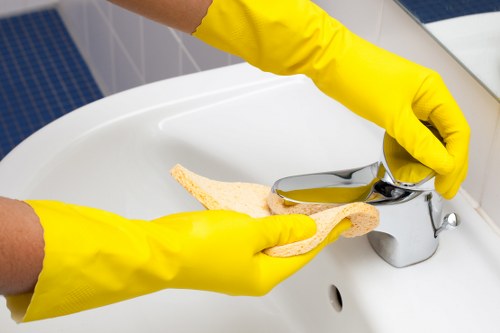
Emergency Procedures and Reporting
Clear procedures exist for first aid, fire, medical emergencies and evacuation at properties where end tenancy cleaning work is undertaken. Staff are instructed on how to report incidents, near misses and hazardous conditions promptly, and the organisation conducts investigations to identify root causes and prevent recurrence. All incidents are documented, reviewed and any remedial actions tracked to completion, reinforcing a learning culture across the end-tenancy cleaning operations.
Monitoring, Review and Commitment
Endoftenancy Cleaning commits to regular monitoring of health and safety performance, including workplace inspections, audits and review of incident trends. Management will review this policy periodically and update safe operating procedures to reflect changes in best practice, equipment or materials. The company emphasises collaborative participation from all staff and encourages reporting of hazards and suggestions for improvement. Key elements of ongoing commitment include:- Periodic review of risk assessments and control measures
- Regular training refreshers and competency evaluations
- Maintenance and inspection programmes for equipment and PPE
- Clear lines of communication for reporting concerns and incidents
The policy is endorsed by senior management and forms a consistent framework for delivering a safe end of tenancy cleaning service. By embedding these principles, Endoftenancy Cleaning aims to protect people, preserve property and maintain high standards of occupational safety across all assignments.